
Cloud Computing: Fundamentals, Infrastructure, Architectures and Service Models provides a comprehensive introduction to the concepts, technologies, infrastructure, architectures, and service models that constitute modern cloud computing. The book is designed to develop a strong conceptual foundation while helping readers understand how cloud-based computing environments are designed, deployed, managed, and utilized. The book begins with the fundamental concepts of cloud computing, including its evolution, characteristics, benefits, limitations, and enabling technologies. It explains how cloud computing has transformed traditional approaches to computing by providing on-demand access to shared computing resources through flexible and scalable environments. A major emphasis is placed on the infrastructure of cloud computing, covering essential technologies such as data centres, servers, storage systems, networking, virtualization, and resource management. These topics help readers understand the technological foundation upon which cloud services are built. The book also provides a detailed discussion of cloud architectures and deployment models, explaining how different architectural components interact to deliver reliable and scalable cloud services. The major service models— Infrastructure as a Service (IaaS), Platform as a Service (PaaS), and Software as a Service (SaaS)—are examined in detail, along with their characteristics, use cases, advantages, and limitations. Public, private, hybrid, and community cloud approaches are also introduced to provide a broader understanding of cloud deployment strategies. In addition, the book addresses important aspects of cloud computing such as scalability, elasticity, resource provisioning, storage, security, privacy, reliability, interoperability, and service management. Emerging technologies and approaches, including containers, serverless computing, cloud-native architectures, and distributed computing, are introduced to help readers understand the continuing evolution of cloud platforms. The content is organized in a systematic manner, progressing from fundamental concepts to infrastructure, architectures, service models, and advanced topics. Clear explanations and practical perspectives are provided to make complex concepts accessible to learners while maintaining sufficient technical depth for academic study. This book is particularly suitable for undergraduate and postgraduate students, faculty members, researchers, IT professionals, and anyone interested in understanding the foundations of cloud computing. It can also serve as a reference for courses related to cloud computing, distributed systems, virtualization, cloud infrastructure, and emerging computing technologies. By the end of the book, readers should be able to understand the fundamental principles of cloud computing, identify and compare major cloud architectures and service models, explain the infrastructure that supports cloud environments, and appreciate the opportunities and challenges associated with adopting cloud technologies.
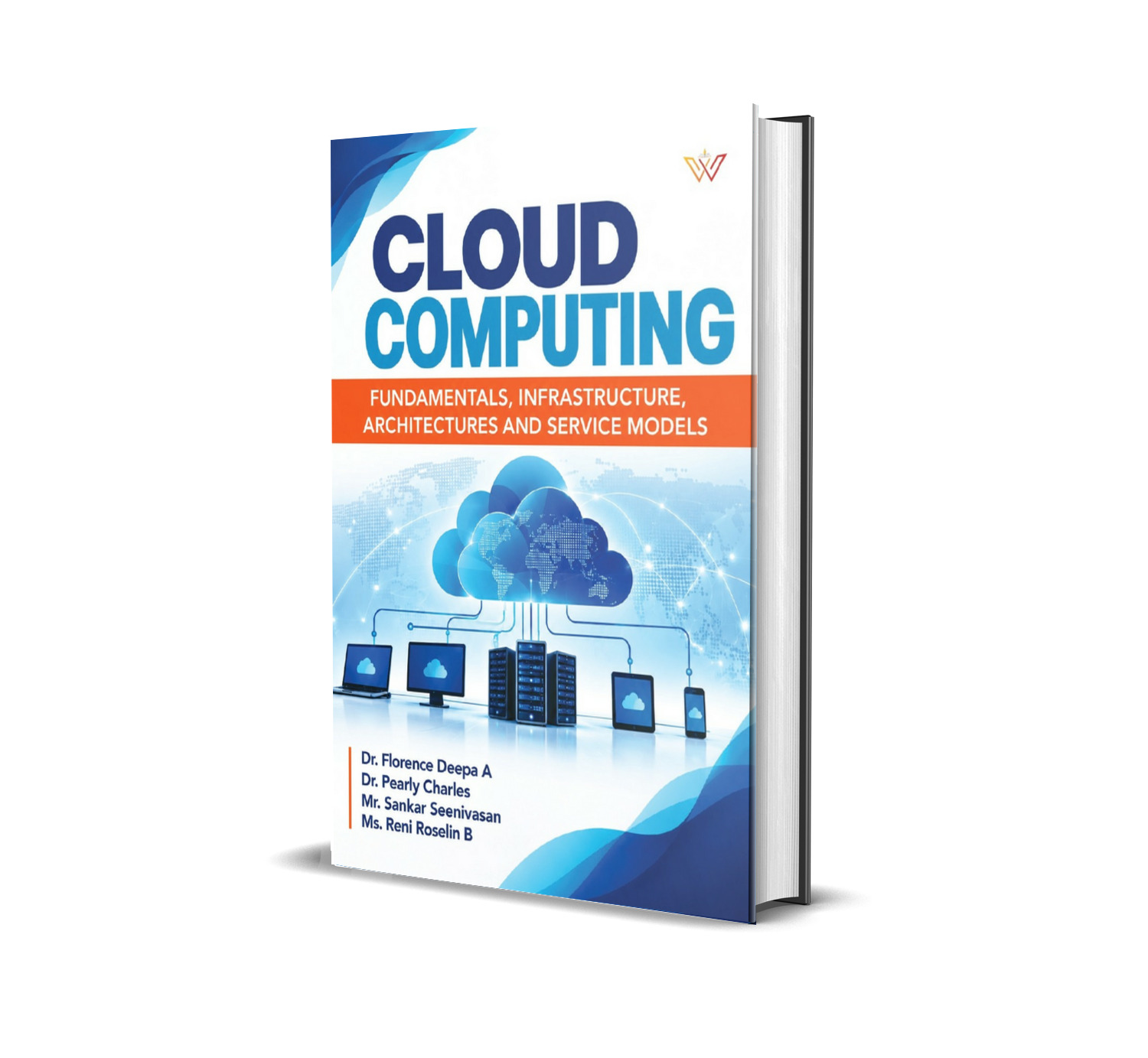
Cloud Computing : Fundamentals, Infrastructure, Architectures and Services
₹299.00
Author : Dr. Florence Deepa A, Dr. Pearly Charles, Mr. Sankar Seenivasan & Ms. Reni Roseline B
ISBN : 978-93-7525-162-0
Genre : Academic Book
🔒 Safe & Secure Checkout


Related products
-
When Success Becomes A Target
₹1,400.00 -
The Midnight Audit
₹299.00 -
The Parent Every Mind Deserves
₹349.00



Reviews
There are no reviews yet.